
Recipe
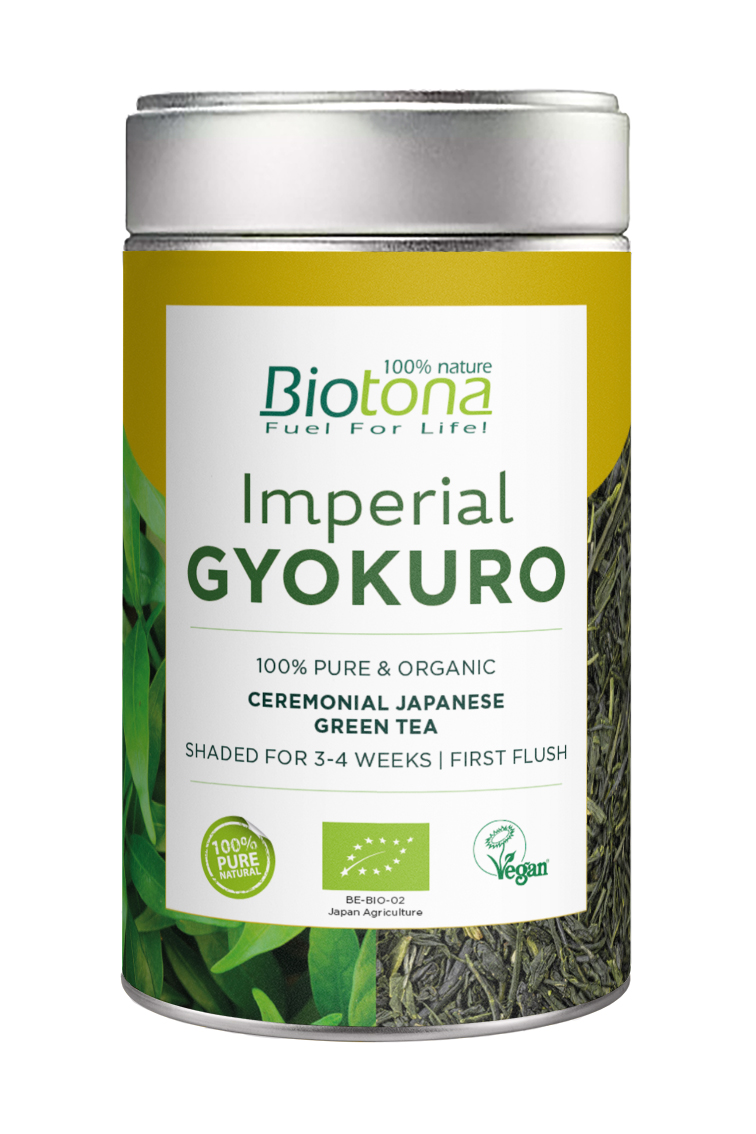
Gyokuro green tea: discover the unique power of Biotona Imperial Gyokuro
What is Gyokuro tea?
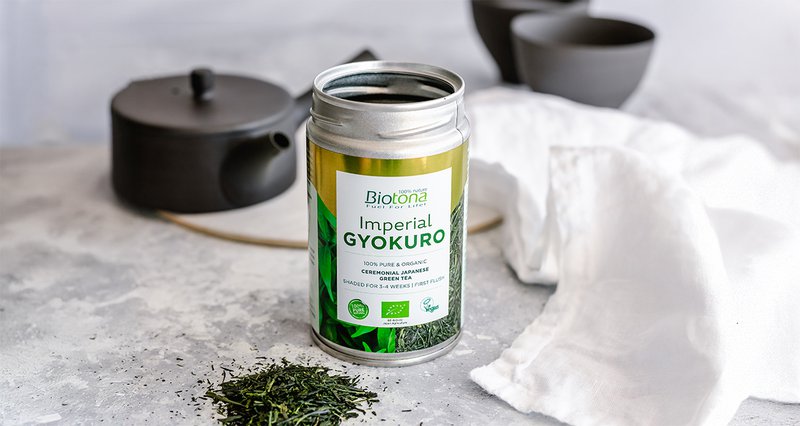
Gyokuro green tea is one of the most refined varieties of Japanese tea and is made from the young leaves of Camellia sinensis, the plant from which all real tea is derived. What makes Gyokuro different from other types of tea is not the plant itself, but rather the unique shading techniques used in its cultivation, which significantly enhance its flavour, colour and nutritional value.
The name Gyokuro literally means ‘jade-dew’, a reference to the emerald-green colour of the resulting infusion and its mild, creamy, umami flavour. Biotona Imperial Gyokuro will allow you to experience what Gyokuro tea truly is: a premium green tea that harmonises traditional Japanese tea culture with the daily demands of modern-day wellness.
The meaning of ‘jade-dew’ (Gyokuro 玉露)
The word ‘Gyokuro’ is made up from two different Japanese characters:
- 玉 (gyoku) — meaning ‘jade’, a precious stone with an emerald-green lustre.
- 露 (ro) — meaning ‘dew’, the droplets of moisture that form on leaves in the early morning.
Taken together, these characters therefore literally mean ‘jade-dew’. This name refers to the deep green colour of the leaves of the tea plant and the fresh and refined flavour that makes Gyokuro so unique.
Why Gyokuro green tea is so special
The secret of shadow
Whereas Sencha tea grows freely in the sun, Gyokuro tea is immersed in shadow for 3–4 weeks before the leaves are picked by hand. As a result of this reduction in its exposure to sunlight, the tea plant produces more chlorophyl and amino acids, such as L-theanine. This process:
- increases the level of L-theanine (for calm focus);
- ensures a deep emerald-green colour, resulting from increased chlorophyl production;
- softens the otherwise bitter flavour (fewer catechins);
- creates a distinctive umami profile for which Gyokuro is famous.
The shadowing techniques used in the cultivation of Gyokuro make it one of the most complex and most luxurious of all the Japanese green teas.

By limiting the amount of sunlight, the leaves are encouraged to convert less L-theanine into catechins, allowing the resulting tea to retain its milder, sweeter flavour, while still being rich in antioxidants.
Origin and growing region
Top-quality Gyokuro comes primarily from two main regions:
- Uji (Kyoto) → famed for its centuries-old tradition and refined cultivation techniques.
- Yame (Fukuoka) → known for its modern cultivation techniques and intense umami flavour.
In addition to the region of origin, a number of key cultivars like Saemidori, Asanoka and Okumidori – or the way they are carefully mixed – help to determine the ultimate flavour and character of the green tea.
Scientific support for the power of Gyokuro
Gyokuro contains a unique combination of components:
- L-theanine → induces relaxation without sleepiness and improves concentration.
- Caffeine + L-theanine → provides a gentle energy boost with mental clarity.
- Chlorophyl → detoxifies the body and enhances vitality.
- Polyphenols (EGCG and catechins) → offer antioxidative protection and support the metabolism.
Studies suggest that these substances can contribute to:
- protection against oxidative stress and cell ageing;
- healthy weight control and metabolic function;
- improved mental function and calm;
- enhanced natural resistance.
A journey to recovery: the experience of a tea drinker
Sometimes the health benefits of products can remain abstract – until you experience them for yourself. A Biotona customer has kindly shared a story that makes clear the power of drinking Gyokuro tea on a daily basis:
“Three years ago, I decided to start drinking high-quality Japanese tea each day. I alternated between Matcha, Kabusecha and Gyokuro. At the time, I was affected by chronic sinus problems, high levels of cholesterol, various inflammatory complaints and frequently recurring colds. I also had a genetic condition, which meant that the level of my liver enzymes was too high. I thought that these were all things that I would simply have to live with.”
Slowly but surely, the situation began to change:
“My sinus problems disappeared completely – confirmed by an MRI scan, which showed that my nasal mucosa was clear again. My cholesterol dropped to a healthy level and it has been years since I was last troubled by colds and flu. My stamina and endurance improved, so that I can now run for longer and with a lower heart rate during both exercise and recovery. Even my skin looks healthier and I feel younger on the inside. The biggest surprise? For the first time in my life my liver enzymes are behaving normally.”

The customer also noticed an improvement in his mental faculties:
“Since I have been drinking Gyokuro, my memory and focus have become sharper. I am much calmer, but at the same time more alert. This is clearly the effect of the L-theanine, in combination with caffeine. What started out as a tentative experiment turned out to be one of the best decisions I have ever made.”
This testimony illustrates what has already been suggested by research: when the drinking of Japanese green tea becomes a daily habit, it can have noticeable effects on both body and mind.
Source: Linards Zarins (IG account: https://www.instagram.com/linardszarinsofficial/)
What is the best way to prepare Gyokuro?
The magic of Gyokuro is not only to be found in its leaves, but also in the way the tea is prepared.
Recommended method:
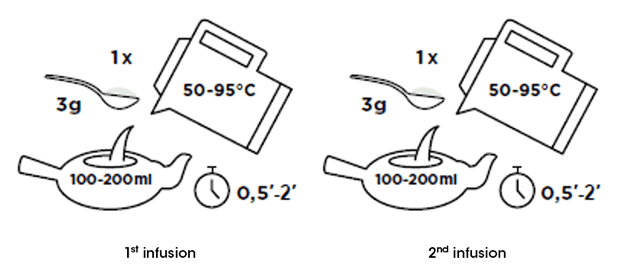
- Water → bring to the boil and allow to cool to 55–60 °C.
- Leaves → use 5–6 grams of tea for 120 ml of water.
- First infusion → allow the leaves to brew for 2 minutes.
- Further infusions → pour in further (and slightly hotter) water but brew for a shorter period; you can do this three or more times.
- Consciously enjoy → drink your tea slowly, so that the experience is as valuable as the flavour.

Tip: Use a small Japanese teapot (kyusu) and warm your cups in advance.
A daily wellness ritual
Drinking Biotona Imperial Gyokuro is an invitation to make a centuries-old Japanese tradition part of your daily wellness routine.
- In the morning Gyokuro gives you focus without the restlessness of coffee.
- In the afternoon it helps you to recover your balance.
- Every cup provides a moment of pure tranquillity, vitality and refinement.
Conclusion
Gyokuro is more than just another green tea. It is the product of a centuries-old tradition, careful cultivation techniques and the silent interplay of nature and craftsmanship. Every jade green drop of Biotona’s Imperial Gyokuro is imbued with tranquillity, refinement and a touch of vitality.
Why not give this inspiring ritual a try as part of your own daily wellness routine? Who knows? It may transform your life, as it has already done for many thousands of other tea lovers.